The latest diplomatic push between Washington and Tehran has run into conflicting claims, with US President Donald Trump warning of consequences if Iran fails to honour any future agreement, while Iranian officials insist they have made no new commitments on nuclear inspections.
The disagreement surfaced after technical talks held in Switzerland, where US officials projected optimism about progress on regional security and nuclear oversight. Iran, however, challenged key American assertions and maintained that its cooperation with international inspectors would continue only under existing legal obligations.
Advertisement
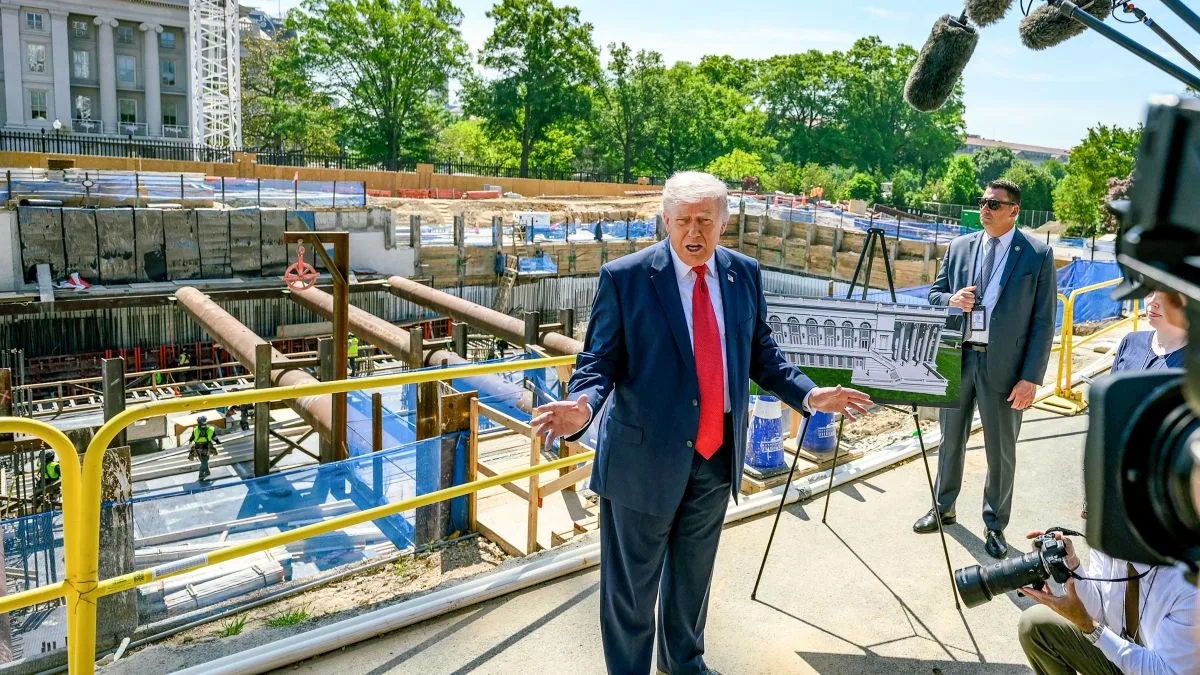
Speaking at the White House during the signing of executive orders on quantum technology, Trump said his administration would respond if Iran failed to comply with any eventual agreement.
“If Iran doesn’t live up to their agreement, or if they’re not behaving, I will do what I have to do,” Trump told reporters.
He also dismissed concerns that tougher action against Tehran could trigger a global economic crisis.
“Well, not the way I’m doing it. It’s not going to cause depression,” Trump said.
The US President argued that preventing Iran from obtaining nuclear weapons outweighed economic concerns.
“If they don’t abide by — well, nuclear weapons supersede depression. Depression is real bad… a nuclear weapon will cause depression much more quickly,” he said.
Trump backs Vance’s claims after Switzerland talks
The remarks followed Trump’s endorsement of Vice President JD Vance’s assessment of the latest US-Iran discussions in Switzerland.
In a post on Truth Social, Trump claimed Iran would accept extensive weapons inspections aimed at ensuring what he described as “Nuclear Honesty.”
“Everybody is fully aware that Iran will agree to have Major Weapons Inspections in order to ensure ‘Nuclear Honesty’ long into the future,” Trump wrote.
Earlier, Vance had described the talks at Burgenstock as productive and said they had created momentum toward a broader agreement.
“We laid a very good foundation for a successful final deal,” Vance said.
According to the US Vice President, negotiators established mechanisms related to maritime security, regional stability and oversight measures intended to prevent Iran from developing nuclear weapons.
Vance also claimed Iran had agreed to admit nuclear inspectors and said inspection systems would be strengthened.
“You can’t trust anybody’s words–you have to trust what they actually do. Letting in the inspectors is a big deal,” he said.
Iran rejects claim of new inspection commitments
Tehran offered a sharply different account of the discussions.
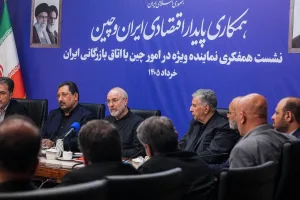
Iranian Foreign Ministry spokesperson Esmaeil Baqaei said cooperation with the International Atomic Energy Agency would continue under existing safeguards agreements and in line with decisions taken by Iran’s parliament and the Supreme National Security Council.
“Iran’s interactions with the Agency, in accordance with Iran’s obligations under the Safeguards Agreements, will continue according to existing procedures and comply with the laws enacted by the Islamic Consultative Assembly (Majlis) and the decisions of the Supreme National Security Council (SNSC),” Baqaei told Iran’s state-run news agency IRNA.
According to IRNA, sources familiar with the Switzerland discussions said Iran neither negotiated its nuclear programme during the talks nor accepted any new inspection-related obligations.
The sources also said any future discussions concerning Iran’s nuclear activities under the 14-point memorandum of understanding would depend on the implementation of Paragraph 13 of the agreement.
US cites progress on regional security
Vance said negotiators had also worked on mechanisms intended to keep the Strait of Hormuz open and support regional de-escalation efforts.
He described the talks as “a very productive 36 hours” and said both sides had left technical teams behind to continue discussions.
Meanwhile, Switzerland welcomed the diplomatic engagement involving the United States, Iran, Pakistan and Qatar.
The Swiss Foreign Ministry said the creation of a high-level committee and a roadmap towards a final agreement within 60 days represented positive progress and could support further negotiations.
The differing narratives from Washington and Tehran nevertheless highlight the challenges that remain before any broader agreement can be reached on nuclear oversight and regional security.